Understanding the needs of media users in Wales: An analysis of UK-wide news and public knowledge about devolution
Professor Stephen Cushion, School of Journalism, Media and Culture at Cardiff University
Executive summary
Reporting the UK and devolved politics
Given the continued dominance of UK-based news in Wales, a content analysis of network news produced by leading broadcasters was carried out. This included analysing over 3000 social posts, online articles and TV news items on the BBC, ITV, Channel 4, Channel 5 and Sky News between October and December 2025.
Social media
When posts had clear devolved relevance, over seven in ten posts (73%) did not state whether the issue applied to England only, such as in stories about health, education and transport. Just 13.2% of these posts included a reference to England (or England and Wales if a legal issue) to signal its relevance, whilst 13.8% explicitly named either Wales, Scotland or Northern Ireland to made it clear a policy issue had devolved government responsibility.
Online news
Just over a third of all online articles (35.3%) did not provide any clarity about the story being relevant to either England, Scotland, Wales or Northern Ireland. For example, some online stories covered the ongoing junior doctors’ strikes without stating they were happening in England only.
Over seven in ten online articles (N= 167, 72%) included general references to “government” or “the government” without attributing it to a particular government at a UK-level or one of the devolved administrations.
Finally, we found that over three in ten online articles (N=79, 34.1%) included references to Secretaries of State - where the devolved governments have an equivalent position (in education, say, or health) - without stating their geographical or governmental remit.
Clarity of devolved reporting in TV news
Over half the items on TV news (57.4%) did not provide any clarity about the story being relevant to a specific nation, such as England, or England and Wales. For example, most broadcasters failed to mention that the “National Grooming Gangs inquiry” only related to England and Wales, as Scotland and Northern Ireland are responsible for policing and criminal justice.
Almost two thirds of TV news items (N=30, 63.8%) included general references to “government” or “the government” without attributing it to either the UK Government or one of the devolved administrations’ governments.
Finally, over a third of TV news items (N=16, 34%) included references to Secretaries of State - where the devolved governments have an equivalent position (in education, say, or health) - without stating their geographical or governmental remit.
Overall themes of coverage
Overall, the study discovered repeated patterns of coverage across different broadcasters and media platforms, which included:
News stories did not reference the relevance of an issue to England only (or England and Wales only) on social media posts, online news and TV news coverage.
On social media, when reporting policy issues posts did not regularly signpost the relevance to England only, although either the headlines or opening sections of online articles did.
There were many references to “the government” without stating UK government or to “you” or nationwide even when relevant to England only (or England and Wales.)
References to Secretaries of State did not regularly state their jurisdictions (e.g. UK Government Secretary of State of Health or Secretary of State for Health in England).
Few social media posts about the devolved nations (either Scotland, Wales or Northern Ireland) and when such posts did appear, the stories were often quirky.
Very few news stories across social media sites, online news and TV news coverage compared and contrasted different approaches taken by the UK government and the devolved administrations.

Public knowledge about politics in Wales
A Cardiff University/YouGov representative survey of 1544 people in Wales in February 2026 examined public knowledge and understanding of devolved politics, Welsh party leaders and the Senedd’s new voting system.
News consumption habits
Despite over 25 years of devolution, UK‑wide outlets remain the primary news source for many in Wales: 46% rely on UK news most often, such as BBC, ITV and Sky News, compared with 10% who mainly use Wales‑produced news; 34% say they use both equally and 10% are unsure. Online habits show a similar pattern (53% mainly UK‑wide sites vs. 14% Wales‑produced).
Knowledge of devolved powers
Policing: 69% were wrong or didn’t know who is responsible; 45% mistakenly attributed it to the Welsh Government, 31% correctly identified Westminster, 7% wrongly said Local Councils and 17% were unsure/didn’t know.
Broadcasting: 58% misidentified or didn’t know; 42% correctly said Westminster.
Economic development: 51% were unclear; 49% correctly named the Welsh Government and 30% incorrectly said Westminster.
Social care delivery: Knowledge was weakest: 81% were incorrect or unsure; only 19% correctly identified local councils as responsible.
Education: 70% correctly said Welsh Government; 30% incorrect/don’t know.
Health and social care: 69% correctly said Welsh Government; 32% incorrect/don’t know.
Transport: 65% correctly said Welsh Government; 35% incorrect/don’t know.
Immigration: 71% correctly said Westminster; 29% incorrect/don’t know.
Awareness of party leaders
Eluned Morgan (Welsh Labour) is known by 62% of survey participants, while Rhun ap Iorwerth (Plaid Cymru) is recognised by 47%.
Awareness of other leaders was markedly lower: Darren Millar (Welsh Conservatives) 21%, Jane Dodds (Welsh Liberal Democrats) 18%, Anthony Slaughter (Wales Green Party) 4%.
Nigel Farage (Reform UK) was almost universally recognised (94%). Dan Thomas, Reform’s new leader in Wales, is known by 10%.
Understanding the new Senedd voting system
When asked to describe the Senedd’s voting system, 58% said they didn’t know. Only 7% correctly identified the Closed List system, while 18% thought it was First Past the Post, 13% chose the Additional Member System, and 4% said the Single Transferable Vote.
Media use and views about UK-wide reporting
When presented with UK-wide examples of news stories on online and social media posts, respondents struggled to place stories in the correct constitutional context – misreading an England‑only junior doctors’ strike as being relevant UK‑wide and rarely selecting the correct combination of governments for housing and fracking responsibilities.
Public evaluations of UK‑wide coverage of Welsh politics were more negative than positive: 46% said UK‑wide outlets do a bad job, 28% a good job, and 26% were unsure.

Public attitudes to UK-wide and Welsh news media
Cardiff University/YouGov carried out three focus groups of people in Wales in February 2026 to explore public attitudes and understanding of UK-wide and Wales specific news media. The three groups included 1) 17-29 year olds with low political knowledge, 2) 30+ year olds with low political knowledge and those who frequently consume news via TV and 3) mixed ages with low political interest / engagement.
UK vs Wales specific news consumption
Most participants preferred UK-wide news over Wales specific news for three main reasons: 1) importance and relevance, such as covering events in Westminster, 2) more engaging range of stories, and 3) broader news agenda, including coverage of international affairs.
Understanding devolved politics in UK-wide reporting
When shown clips of UK-wide coverage of the junior doctors strikes, all participants appreciated reporting clearly saying “Doctors in England” since it was clearer, and generally more informative than coverage that did not state the relevance to England only.
When shown a social media post which referred to the Health Secretary, all participants were confused about which nation the story applied to and recommended a range of solutions to adding clarity, such as “NHS England” and “English Health Secretary”.
Participants preferred short, simple location references in news headlines. They felt that clear, minimal signposting makes information easier to consume, and that explicit mentions of Wales would increase their interest.
Overall, participants welcomed greater representation of all UK nations in national news, but felt regular nation‑based presentation should be used selectively and guided by news relevance.
What people want from news reporting
UK broadcasters were seen as applying uneven scrutiny, giving more attention to major parties than smaller ones.
When shown a clip of a journalist robustly questioning a Welsh party leader, participants felt the scrutiny was fair and well-executed and they would welcome it applied more consistently across UK and Welsh political interviews. They viewed this type of questioning important for holding politicians accountable and helping the public understand issues clearly.
Participants agreed that journalists tended to focus more on personalities and campaigns, when they would prefer more focus to be given to policy issues and how these policies will impact the public.
Many participants reported low confidence in understanding the differences between Welsh political parties ahead of the 2026 election. They were particularly interested in learning about parties’ plans for healthcare and the economy.
Participants were aware of Ofcom, the UK’s main media regulator, but unclear of its remit and as a result questioned its influence. While there was some support of Ofcom’s applying stricter regulation of UK broadcasters to improve network coverage of Wales and devolved politics, there was an overall scepticism about the regulator’s effectiveness and impact.
Contents

A Welsh Government funded project via Creative Wales
Foreword
“Ensuring that media audiences across Wales have clear, accurate and relevant information about the issues that shape their daily lives is essential to a healthy democracy and the Welsh Government has been proactive in promoting and supporting this principle. As this research demonstrates, the way news is framed across UK‑wide, broadcast, online and social media platforms has a profound influence on public understanding of devolved responsibilities. Too often, people are left without the clarity they need to distinguish where powers lie, who is accountable, and how decisions taken in either Cardiff or Westminster affect them.
This study, funded by the Welsh Government via Creative Wales, provides a comprehensive assessment of both the information available to audiences in Wales and the levels of public knowledge about devolved politics. Its findings underline the importance of strengthening the visibility of Wales across UK‑wide news, improving signposting in reporting, and ensuring that all nations of the UK, are reflected accurately and fairly and I hope it will be used to inform policy and decision making going forward.
By improving clarity, representation and scrutiny, the media can help people make informed choices and participate confidently in our democratic life and that is crucial in building a society where people feel they have a say over their daily lives and futures. This research provides an important evidence base for policymakers, regulators, and news organisations alike, as well as offering valuable insight into how the public view political coverage in Wales and the areas where they want to see more depth, scrutiny and relevance. By working collectively to improve the visibility and accuracy of devolved reporting, we can support a better-informed public and a stronger democratic culture across Wales. I welcome the report and constructive engagement shown by broadcasters throughout this work, and the recommendations it provides for the ongoing support needed to ensure that news provision better serve audiences in Wales.”
Jack Sargeant MS
Welsh Government Minister for Culture, Skills and Social Partnership
“As we move towards a new, larger, Senedd, Professor Cushion’s research couldn’t be more timely. Public understanding is crucial for democracy to function. It is a significant problem that as the Senedd has grown and gained greater powers since 1999, journalism has retreated from local communities in Wales, as it has across the world.
As a committee in the Sixth Senedd, we consistently said that the supply of media content for Wales is inadequate. Professor Cushion’s research provides a more detailed picture, and demonstrates the effect of this inadequate supply.
We were able to benefit from the early results of Professor Cushion’s research in the Committee’s recent work on Public Service Broadcasting. This led us to recommend to the BBC, ITV and S4C that they drive improvements in their own social media coverage of devolved issues. It is invaluable that Professor Cushion’s research has provided an empirical basis to what we, as media consumers, felt to be true.
The report’s recommendations provide a useful framework for improving news coverage of Wales. We have called on the BBC, ITV and Channel 4 to improve their UK-wide coverage of Wales. The recommendations in this report show what these improvements could look like.
We have also called for Ofcom to “continuously review UK network news coverage of devolved policy issues.” This report calls for further research into news output and public understanding. Continued research is essential to see where improvements are being made, and what challenges remain.
This inadequate media content diminishes Wales on a civic and democratic level. It is now up to broadcasters, the UK Government, Ofcom, the new Welsh Government and new Members of the Seventh Senedd to make this situation better”.
Delyth Jewell MS
Chair of the Senedd's Culture, Communications, Welsh Language, Sport, and International Relations Committee
Context
Since 1999, Wales has had growing responsibilities over key areas of social and economic policymaking. Yet it has become increasingly challenging to inform many people about the issues that affect them, with fewer journalists and news outlets providing first-hand reporting in Wales, stripping the nation of much needed public interest journalism. At the School of Journalism, Media and Culture at Cardiff University, we have been monitoring how the public consume news in a post-devolution environment, with many people in Wales still reliant on UK-wide media. Yet how effectively UK-wide media communicate political news to audiences remains unclear despite the constitutional need for people to understand the devolved relevance of stories across all four nations.
The aim of this Welsh Government funded project via Creative Wales was to generate robust, evidence-based research about the needs of media users in Wales. We did so by: 1) assessing UK-wide news coverage of devolved politics; 2) surveying people about their relationship with and knowledge of news and devolved politics; and 3) carrying out focus groups exploring how news media can become more informative and engaging to enhance public understanding. Taken together, the study provides one of the most comprehensive evidence base to date on media users in Wales, and identifies where news media can better serve the public’s democratic needs.

Above all, the study found the public have limited knowledge about the different responsibilities of the Welsh and UK governments, key political figures in Wales and the Senedd’s new voting system. For example, many people in Wales thought certain powers had been devolved when they remain under the control of Westminster’s Parliament. Meanwhile, a significant minority of people in Wales did not know that policy responsibilities in health and education have been devolved to Wales.
The survey confirmed the continued preference of UK-wide/English produced news over Wales-specific sources. It found UK network news, in particular the BBC and ITV, remain the primary source of information for many people in Wales. While our past studies have shown these UK news outlets supply a range of high quality news provision, news about Wales and Welsh politics has historically played a relatively marginal role in day-to-day coverage. When politics is reported in UK network news, there has often been limited clarity about which government across the four nations is in charge of domestic policies. For example, coverage of issues such as law and order, health service pressures and industrial action (including junior doctor strikes) have not always clarified whether these issues applied to England, to Wales, or to the whole UK.
This updated 2025 assessment of UK-wide news reporting including social media posts, online and TV news found similar if not more striking conclusions about the lack of clarity when attributing responsibility for key policy areas, such as in health and education. The systematic analysis of social media posts, for example, found a large proportion did not signpost whether a story applied to England only. This is particularly significant given the public’s increasing reliance on social media where they often scroll through their feeds without clicking through to a news story. In other words, the public often see news about issues devolved to the Welsh government, but the reporting does not tell them whether it is relevant to Wales, England and Wales, other nations, or to the whole of the UK.

The focus groups revealed people’s preference for UK-wide news over Wales specific media, but also frustration in coverage of the nation and Welsh politics. Above all many felt UK-wide news was viewed through the prism of England and Westminster, with Welsh politics on the margins of coverage. Participants called for short, simple location references in news headlines. They felt that clear, minimal signposting makes information easier to consume, and that explicit mentions of Wales would increase their interest.
Neither the survey nor focus groups research can assess the direct impact of news media on public knowledge and understanding. That would require taking into account other factors such as age, education and social class. But the study’s findings reveal the information environment Welsh audiences are routinely exposed to and suggest why many people might misunderstand which government is responsible for key policy areas. When respondents in the representative survey were shown a BBC news story about a junior doctors’ strike in December 2025 and asked where the issue applied, more people believed it was a UK‑wide issue rather than it happening in England only. Given our updated study of UK-wide news found many news stories or social media posts did not explicitly state which powers were devolved, or regularly sought to compare and contrast policy decisions across the four nations, it is understandable why there is widespread public uncertainty about which government is responsible for issues such as health, education, housing and transport.
We have shared our analysis with all the UK’s major broadcasters while carrying out this research project. They have all been receptive to the study’s findings and constructively engaged with us about how UK-wide news can better reflect the nations and devolved politics in the UK. Having carried out many studies of UK-wide news over several decades, we are aware of the need to keep this issue on the agenda of broadcasters and the wider public. We believe debates need to be informed by robust, evidence-based reviews not only of news output on different media platforms, but also of how audiences interpret and understand coverage. With this in mind, we have put forward a set of recommendations for key stakeholders, including the UK’s major broadcasters, Ofcom, the media regulator, and Welsh Government.
Recommendations: enhancing UK-wide news of the nations and public knowledge of devolved politics
Recommendation 1: Broadcasters’ editorial guidelines about reporting the UK and devolved politics should be updated to take into account the public’s increasing reliance on social media for news. Given many people scroll through social media feeds without clicking through to full stories, it is essential posts on sites such X, Instagram, TikTok and Facebook make it clear which government is responsible for a policy issue.
Recommendation 2: To enhance public knowledge about devolved powers broadcasters should not just state if a policy is relevant to England in news stories, but where possible explicitly spell out any differences in Scotland, Wales or Northern Ireland.
Recommendation 3: Broadcasters should consider reporting more compare and contrast news stories that explore the different political choices of devolved governments. In health, transport, education and many other key areas, there are comparative policies that could potentially interest audiences in England, as well as in Scotland, Wales and Northern Ireland.
Recommendation 4: The Welsh Government should engage with the UK’s Civil Service departments in areas of devolved responsibility (health, education, housing, etc.) to ensure press releases and other forms of communications accurately state where policy responsibilities relate to England only, and highlight any differences across the UK.
Recommendation 5: Since coverage of the nations and devolved politics in UK-wide news media has been a constant concern over the past two decades, the Welsh Government should fund an independent bi-annual review of network news output and people’s understanding of Welsh politics. This will ensure the issue remains on the radar of broadcasters, regulators and the wider public, with debates informed by robust rather than anecdotal evidence.
Recommendation 6: While Ofcom may not have the resources to regularly monitor network news coverage or undertake audience studies about public knowledge of devolution, the regulator could remind broadcasters of the importance of accurately reporting the UK’s constitutional arrangements in official guidance issued ahead of elections or in other periodic reviews and assessments of news output.
Reporting the UK across social media, online and TV news
At the School of Journalism, Media and Culture at Cardiff University, we have conducted five previous studies about the reporting of the UK’s four nations and devolved politics. This included commissioned reviews for the BBC Trust in 2008, 2012, 2015 and 2016, as well as for Ofcom in 2022, which have informed several academic publications (Cushion, Lewis and Kilby, 2017, Cushion, Lewis and Groves, 2009, Cushion and Carbis, 2022).
Our previous studies of UK-wide news coverage have focused primarily on broadcast and online news. We have consistently found that Wales (and devolved politics generally) does not feature much in day-to-day UK-wide news coverage. When news relevant to devolution was reported, we have repeatedly discovered that network news provided limited clarity about which government across the four nations was responsible for domestic policies. For example, in coverage of issues such as law and order, health service pressures and industrial action (including the junior doctors’ strike) reporting did not regularly point out when these issues specifically applied to England, to England Wales, or to the whole UK.
Social media focus
Over the last decade, the news landscape has changed and fragmented, with more news consumption habits shifting towards online and social media, while television news has remained a dominant source of information. For the first time in our studies about devolved political coverage, we therefore focused on news produced on social media in addition to online and TV news.
In the UK, social media has become the dominant gateway for news, with 52% of adults using it for news as opposed to directly visiting websites, especially among younger audiences (in fact, only 25% of 18–24-year-olds access news sites directly). Ofcom data shows that 60% of online news consumption occurs via intermediaries such as social platforms, where users typically skim headlines rather than read full articles. This prompted the regulator to commission an audience study titled “Scrolling news: The changing face of online news consumption”, which found people’s engagement with media was largely passive through headline-level exposure to stories. Indeed, Twitter (now X) introduced a “read before you retweet” warning on its platform because news was being widely shared without being read. In short, since many people now scroll through news headlines, how stories are framed on social media could influence how people understand what is happening in the world.
Method and sample
In our content analysis study, we systematically tracked the X accounts of BBC (@BBCPolitcs), ITV (@ITVNewsPolitics), Channel 4 (@Channel4News), Channel 5 (@5_News) and Sky News (@SkyNewsPolitics) and their online and TV news coverage of devolved politics between October and December 2025. In total, we examined 3164 posts across either their news or politics X accounts, including many links to online news stories, and identified whether they have some or clear devolved relevance (in areas like health and education). We used X (formerly Twitter) as a starting point to track stories on other social media accounts across Instagram, Facebook and TikTok, as well as online articles embedded in X posts and TV news stories within the same period. We found examples of social media posts across all broadcasters where the devolved relevance of stories was clearly conveyed, such as stating in England, or in covering devolved politics specifically.
Professor Stephen Cushion and Llion Carbis, Cardiff School of Journalism, Media and Culture, Cardiff University
Clarity of devolved reporting in online reporting
To further examine coverage, we examined all X posts clearly relevant to devolution (N = 478) which had links to online stories embedded in them. We identified 232 articles from 244 posts (with 12 posts containing the same story tweeted more than once).
Overall, just over a third of all online articles (N = 82, 35.3%) did not provide any clarity about the story being relevant to either England, Scotland, Wales or Northern Ireland. For example, some online stories covered the ongoing junior doctors’ strikes without stating they were happening in England only. A third of online articles (N = 78, 33.6%) referenced the relevance to England by stating, for example, the junior doctors’ strikes would impact on English hospitals. Meanwhile just over three in 10 articles (N= 72, 31%) explicitly spelt out the relevance to one or more of the devolved nations by naming them in coverage, such as stating the junior doctors’ strikes were not happening in Scotland, Wales or Northern Ireland.
We further found over seven in ten online articles (N= 167, 72%) included general references to “government” or “the government” without attributing it to a particular government at a UK-level or one of the devolved administrations.
Finally, we found that over three in ten online articles (N=79, 34.1%) included references to Secretaries of State - where the devolved governments have an equivalent position (in education, say, or health) - without stating their geographical or governmental remit.

Key findings on X
Of the 3164 posts examined on X, we categorized them according to their political focus (UK Politics generally (N =997, 31.5%), International Politics (N= 898, 28.4%), Westminster reserved powers (N=410, 13%), some devolved relevance (N=121, 3.8%) and clear devolved relevance: 478 (15.1%), while the remaining posts were about non-political news (N=260, 8.2%). Posts labelled some devolved relevance could have potentially explored devolution, but were not explicitly about devolved politics. For example, the post could be about a devolved issue generally, but the post was not directly related to policy issues and covered more generally. It therefore was not necessary to attribute responsibility for a policy issue to either the UK or devolved government.
We therefore focused on the 15.1% of X posts (478 in total) that was more clearly related to issues that were devolved (health and education, for example) even if the focus of the story was on the UK government or England. That way we could assess if the post provided clarity about which nation(s) the issue applied to or did not.
Clarity of devolved posts on X
On X, just under a fifth of the 3164 posts we examined – 18.9% - had some or clear devolved relevance which we examined more closely. When posts had clear devolved relevance (making up a total of 478 posts), over seven in ten posts (73%) did not state whether the issue applied to England only, such as in stories about health, education and transport. Just 13.2% of these posts included a reference to England (or England and Wales if a legal issue) to signal its relevance, whilst 13.8% explicitly named either Wales, Scotland or Northern Ireland to make it clear a policy issue had devolved government responsibility.
But while acknowledging these best practice examples, we focus now on areas where broadcasters could help audiences better understand what is happening across all four nations, and add more clarity about which government is responsible for policy issues in social media, online and TV news output.
Clarity of devolved reporting in TV news
We further searched for news items relevant to devolution on the UK’s flagship evening TV news bulletins. This was based on stories we identified in our analysis of social media and online news. We found, however, many social policy news stories on X or online did not feature on TV news bulletins.
Overall, we identified 47 news items relevant to devolution across five programmes (BBC News at Ten, ITV News at Ten, 5 News at 5, Channel 4 News at 7pm and Sky News at Ten). This included coverage of the UK Government’s National Grooming Gangs Inquiry (relevant to the legal system of England and Wales), an assessment of Prime Minister’s management of school closures during the Covid-19 inquiry (relevant to the UK government and England), the reporting of the junior doctors’ strikes (relevant to England), NHS England waiting times and mental health services, proposals to scrap jury trails (relevant to the legal system of England and Wales), the UK Government’s early prisoner release scheme (relevant to the legal system of England and Wales), university tuition fees increase (relevant to England), homelessness and pressures on A&E and ambulance services (relevant to the UK government and devolved administrations).
Overall, over half of TV news items (N=27, 57.4%) did not provide any clarity about the story being relevant to a specific nation, such as England, or England and Wales. For example, most broadcasters failed to mention that the “National Grooming Gangs inquiry” only related to England and Wales, as Scotland and Northern Ireland are responsible for policing and criminal justice.
Just under a third of TV news items (N=15, 31.9%) referenced the relevance of a story applying to England only. This attribution was most often provided when reporting England’s junior doctors’ striking. Meanwhile, just over one in 10 news items (N=5, 10.6%) explicitly stated the relevance to one or more of the devolved nations by naming them in coverage. For example, making a comparative assessment of the flu outbreak in Scotland, Wales and Northern Ireland.
Compared to X posts and online articles, overall TV news provided greater clarity about the devolved relevance of stories than in X posts, but less often than in online news.
We identified almost two thirds of TV news items (N=30, 63.8%) included general references to “government” or “the government” without attributing it to either the UK Government or one of the devolved administrations’ governments.
Finally, over a third of TV news items (N=16, 34%) included references to Secretaries of State - where the devolved governments have an equivalent position (in education, say, or health) - without stating their geographical or governmental remit.

Themes of coverage across social media, online and TV news
News stories did not reference the relevance of an issue to England only (or England and Wales only) on social media posts, online news and TV news coverage
UK Government has responsibility of police and crime commissioners in England and Wales.
UK Government has responsibility for assisted dying in England and Wales. A BBC online article referenced England and Wales:
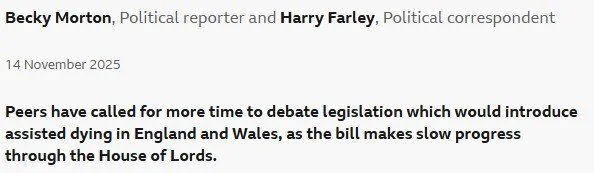
UK government has responsibility for supporting university training in England.
UK government has responsibility for issuing fines to schools in England, but no reference to England in Tik Tok video:
No reference to England in online news story yet references to UK.
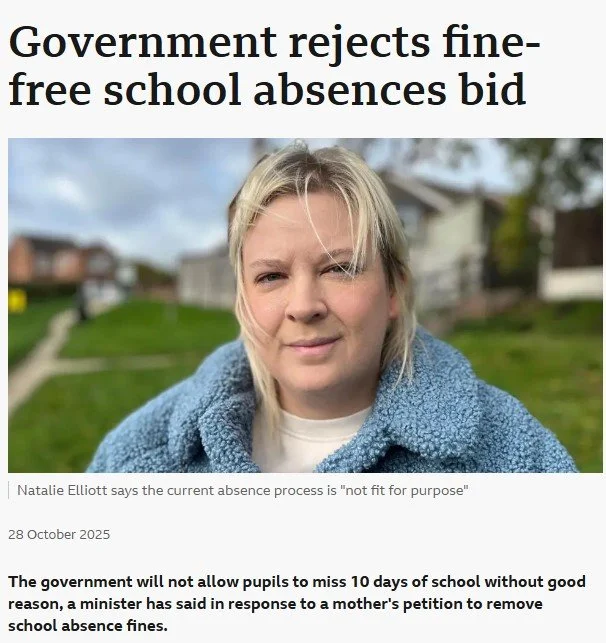
UK government has responsibility for education, but England not referenced in Tik Tok video:
The UK government had responsibility for managing schools during Covid in England.
UK government responsible for education in England, but not mentioned in Tik Tok video.
The strike was relevant to junior doctors in England. But not referenced in Tik Tok video:
Many social media posts do not signpost relevance to England only, but either the headlines or opening sections of online articles do
No reference to England, but referenced in online article.
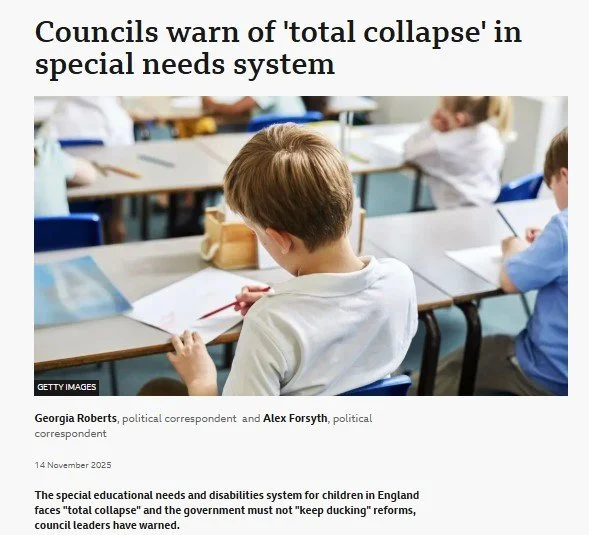
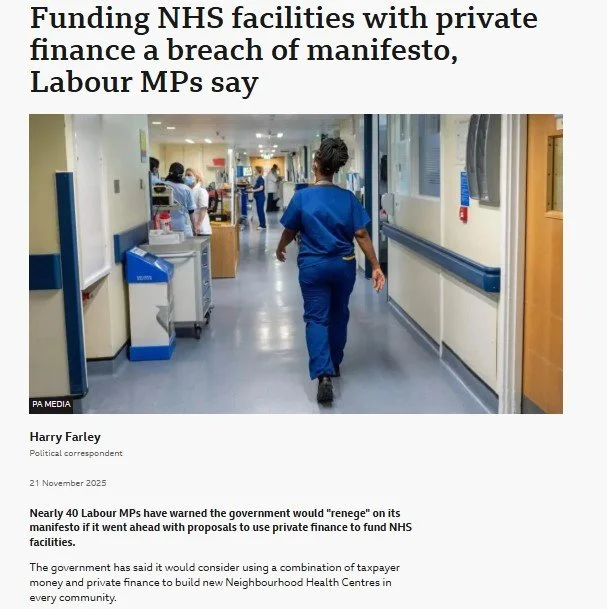
Several online articles do not make any references to either England, Scotland, Wales or Northern Ireland when reporting issues primarily relevant to England only
At no point is England mentioned in article with references to “the government”. This is despite the fact that this was well signaled in UK Gov announcement:
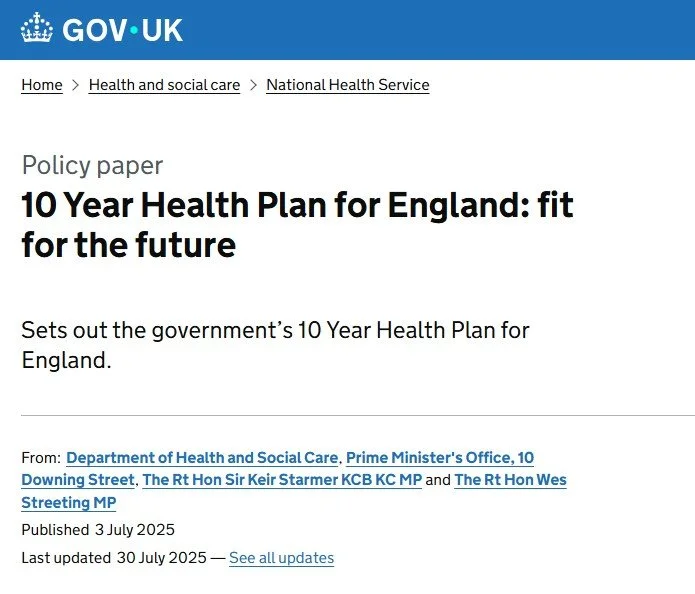
UK government has responsibility for education in England. UK government has responsibility for education in England, but not clearly spelt out where funding is going.
No mention of policy being relevant to England only in ITV online news story, but referenced on TV news in link on webpage.
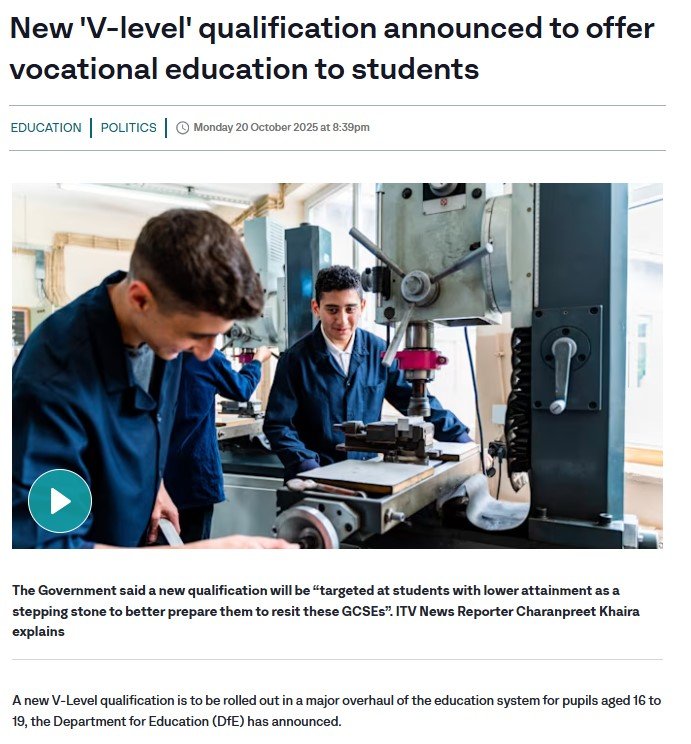
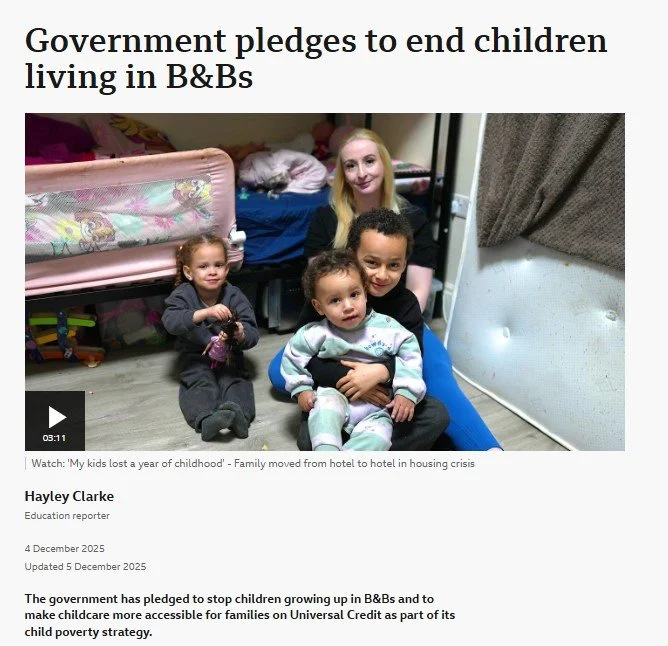
References to “the government” without stating UK government or to “you” or nationwide despite being relevant to England only (or England and Wales)
References to Secretary of States without stating their jurisdictions
Few social media posts about the devolved nations (either Scotland, Wales or Northern Ireland) and when they are often a bit quirky or novel
No social media posts or articles adopt a compare and contrast approach of the nations devolved policies when there were opportunities for comparative review of administrations
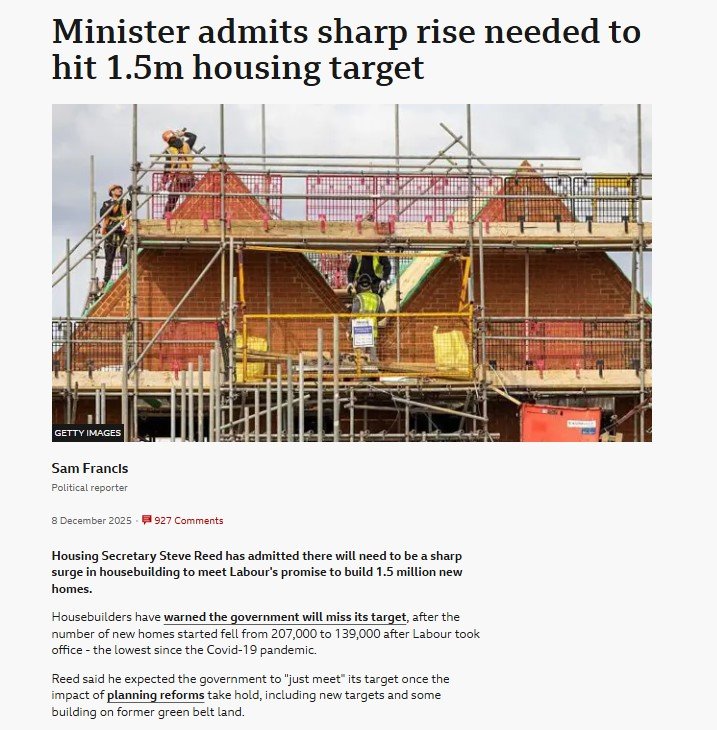
Weight loss jabs prescription rules different across the nations.
ITV News social media post does not mention relevance to England only. There is also a 7-minute interview embedded in online story with an ITV reporter where there was no reference to policies being relevant to England only. No reference to Scotland, Wales or Northern Ireland and any devolved differences.
Public knowledge about devolved powers, leaders and voting in Wales
We worked with YouGov to produce a representative survey about public knowledge of devolved powers. awareness of Welsh party leaders and understanding of the Senedd’s new voting system, as well as what news media they regularly consumed to understand politics and public affairs. All figures, unless otherwise stated, are from YouGov Plc. Total sample size was 1,544 adults. Fieldwork was undertaken between 12th - 25th February 2026. The survey was carried out online. The figures have been weighted and are representative of all Welsh adults (aged 16+).
On public knowledge of devolved responsibilities across the UK the study found:
Policing: Most people were wrong or didn’t know (69%) who is responsible for policing, with 45% mistakenly attributing it to the Welsh Government, while only 31% correctly identifying Westminster as holding this power.
Broadcasting: A majority (58%) misidentified or do not know who oversees broadcasting, including a quarter who incorrectly thought it was the responsibility of the Welsh Government, while just 42% correctly said it was the responsibility of Westminster.
Economic development: Roughly half – 51% - of people did not know or were unclear over who was responsible for economic development (51%), with 30% incorrectly assigning economic development to Westminster, while 49% accurately named the Welsh Government.
Social care delivery: Public understanding was weakest on social care delivery, with 81% answering incorrectly or saying they did not know who was responsible, including 56% who assumed it was a Welsh Government and 8% who said Westminster, with only 19% correcting saying it was local councils.
The survey further found greater public understanding of high profile issues, but still found close to third (between 29% and 35%) of the public lacked knowledge in key areas:
Immigration: A clear majority (71%) of people correctly said that immigration was the responsibility of the Westminster Government, while 29% were incorrect or didn’t know, including 13% who said the Welsh Government.
Education: Seven in ten respondents correctly said that education was the responsibility of the Welsh Government, while 30% were incorrect or didn’t know, including 12% who stated Westminster.
Health and social care: A clear majority (69%) of people knew that health and social care was the responsibility of the Welsh Government, while 32% were incorrect or didn’t know, including 13% who thought Westminster.
Transport: Almost two thirds of respondents (65%) correctly said that transport is the responsibility of the Welsh Government, while 35% were incorrect or didn’t know, including 14% who said Westminster.
On knowledge of party political leaders, the survey found:
Welsh Labour - Eluned Morgan: Eluned Morgan is known to 62% of the public, while a further 17% say they have heard of her but cannot confidently identify who she is and 21% have not heard of the Welsh Labour leader at all. This is a substantial rise compared to a YouGov poll in 2023, when she was Minister for Health and Social Services, in which only 31% had heard of her and knew who she was, with a further 23% saying they had heard of her.
Plaid Cymru – Rhun ap Iorwerth: Just under half (47%) recognised Rhun ap Iorwerth and knew who he is, with another 17% unsure despite having heard his name and 36% saying they have never heard of Plaid Cymru’s leader.
Reform in Wales – Dan Thomas: Only 10% said they knew who Dan Thomas was, with 13% recognising the name but unable to place him, and 77% admitting they have not heard of Reform’s new leader in Wales.
Reform UK – Nigel Farage: Nigel Farage has near‑universal name recognition, with 94% correctly identifying him, only 5% having heard of him without being sure who he was and just 1% saying they have not heard of the Reform UK leader.
Welsh Liberal Democrats – Jane Dodds: Jane Dodds was recognised by 18% of people, with a further 27% staying they have heard of her but were unsure who she was and 55% who said they do not know the Welsh Liberal Democrat leader.
Welsh Conservatives – Darren Millar: Darren Millar was known by 21% of respondents, while 18% have heard of him but cannot identify him, and 61% have never heard of the Welsh Conservative leader.
Wales Green Party – Anthony Slaughter: Awareness of Anthony Slaughter was very limited, with only 4% saying they knew who he was, 15% who have heard the name but cannot place him and 81% said they have not heard of the Wales Green Party leader.
Knowledge of the voting system for the May 2026 Senedd election
When asked about the voting system that will be used for May’s 2026 Senedd election, only 7% correctly identified the new Closed List system, while 18% believed it would be First Past the Post, 13% thought it would use the Additional Member System, 4% selected the Single Transferable Vote and a majority (58%) said they didn’t know.

News consumption in Wales
UK‑wide news is the primary source of information for people in Wales, with nearly half (46%) stating they relied on UK outlets more often, compared with only 10% who said they mostly used Wales‑produced news, while a third (34%) drew on both equally and 10% said they don’t know.
For online news specifically, most people in Wales turned to UK‑wide outlets, with 53% saying they generally used sites such as BBC, ITV, Channel 4, Channel 5 or Sky News, compared with just 14% who mainly relied on Wales‑produced online sources (like BBC Wales or S4C), while 21% said they don’t typically use either type of site and 12% were unsure.For online news specifically, most people in Wales turned to UK‑wide outlets, with 53% saying they generally used sites such as BBC, ITV, Channel 4, Channel 5 or Sky News, compared with just 14% who mainly relied on Wales‑produced online sources (like BBC Wales or S4C), while 21% said they don’t typically use either type of site and 12% were unsure.
In UK-wide TV news bulletins, over a third (34%) said they watched BBC News at 6pm or 10pm very or fairly frequently (15% very, 18% fairly), compared with 30% who watched BBC Wales’ 6:30pm or 10:30pm bulletins with similar regularity (12% very, 18% fairly). On ITV UK-wide at 6.30pm or 10pm and ITV Wales at 6pm or 10.30pm, viewing habits were identical with 17% very or fairly frequently tuning in (5% very, 12% fairly).
Use of commercial online news outlets further highlighted the predominance of UK‑wide news consumption in Wales. A third of respondents (33%) said they read English‑based news sites or newspapers, such as The Times, Guardian, Daily Mail, Sun or Mirror very or fairly frequently (16% very, 17% fairly), while 30% did so not very often and 38% never used them.
By comparison, 29% of people used Wales‑produced online news outlets, such as WalesOnline, Nation.Cymru or North Wales Live, very or fairly frequently (8% very, 21% fairly), with similar proportions stating they read them not very often (33%) or never (38%).
Engagement with Welsh‑language online news is far lower still: only 3% used a Welsh‑language publication like Golwg 360 very or fairly frequently (1% very, 2% fairly), 12% doing so infrequently and 86% of people revealing they never used such sources.

Summary
Across the eight political knowledge questions, the highest levels of misunderstanding or confusion about the powers of Welsh Government were in social care delivery (81%), policing (69%), broadcasting (58%) and economic development (51%).
In more high profile policy areas – in transport (65%), health and social care (69%), education (70%) and immigration (71%) – a majority of respondents knew which government was responsible for these powers, but a significant minority (between 29% and 35%) were incorrect or did not know.
Overall, 70% of respondents identified the government responsible for at least half (4) of the areas correctly, though only 1% were able to correctly identify all of them.
Knowledge of UK politics from reading news stories
When shown an excerpt of a BBC news story headlined “Doctor strike during flu outbreak would be ‘reckless’, says Starmer” from December 2025 and asked where it applied, almost half of respondents (48%) incorrectly believed it referred to doctors across the UK, while only 41% correctly recognised that it applied solely to doctors in England, and a further 11% said they did not know. In other words, a majority of people (59%) did not know the story related to junior doctors striking in England only, or were wrong.
In another simulation to explore how people interpreted news reporting, respondents were shown two posts on X about housing (headlined “Government set to miss 1.5m target, housebuilders warn”) and fracking (headlined “‘We sent those frackers packing. I say let’s ban fracking and vow to send this bunch of frackers packing too’. Energy Secretary Ed Milliband takes aim at Reform’s environmental policies”). They were then asked to tick which political institution had responsibilities over these issues (either the Westminster government, the Welsh government, local councils or the European Union). Just 2% correctly identified both the Westminster government and the Welsh government as being responsible for both issues, with 92% not getting either question correct. Both these policies have been devolved to the Welsh government, which means UK government ministers make decisions about housing and fracking for England. Since both posts did not explicitly state which government was being referred to, it was perhaps understandable that so many respondents did not realise housing and fracking are the responsibility of the UK Government and the Welsh Government.
In the X post about housing, a majority of respondents attributed responsibility to Westminster (59%), with far fewer naming the Welsh Government (15%). Around a third (34%) said they didn’t know, while 13% thought local councils and 1% thought it was the responsibility of the European Union. Only 5% selected the correct combination of The Westminster Government and the Welsh Government.
In the X post about fracking, a majority of respondents once again attributed responsibility to Westminster (62%), with under one in ten identifying the Welsh Government (9%). A third (33%) said they didn’t know, while 6% attributed responsibility to local councils and 2% to the European Union. Only 3% selected the correct combination of the Westminster Government and the Welsh Government.
Assessment of UK-wide news reporting
Public opinion was notably more negative than positive about UK‑wide media coverage of Welsh politics. Almost half of respondents (46%) said UK‑wide outlets did a bad job of reporting, including a near third (32%) of people who described reporting as fairly bad and a further 13% who said it was very bad. In contrast, only 28% thought the media performed well, with 26% saying that coverage was fairly good and just 2% believed it was very good. A further 26% said they were unsure.
Respondents were asked to explain their answer in their own words and these were categorised by YouGov's AI Topic Quantifier. The biggest reason (19%) among those who thought the media has done a bad job was that UK-wide news was too focused on areas like London, South East England, and England as a whole, leaving little room for reporting on Welsh politics. Many others reported that there was little coverage, with 18% saying there was not enough coverage, and a further 5% saying they never or rarely saw Welsh politics in the news. Many of the topics of responses found that the Welsh population believe they are seen as unimportant (2%), or irrelevant/uninteresting (9%). Among those who said the UK-wide news does a good job, the largest reason was that they thought Wales received appropriate coverage (13%).
Finally, when asked what one thing would improve news coverage of Welsh politics in these sources, the largest topic was giving it more airtime (14%) followed by creating a dedicated slot/channel to Welsh news (5%) and wide range of responses that were difficult to categorise thematically. However, notably 40% said they did not know when asked to state one thing they would improve in news coverage of Welsh politics.
Public attitudes to UK-wide and Welsh news media
We worked with YouGov to explore public attitudes of UK-wide and Wales specific news reporting in three focus groups of people in Wales on 25 and 26 February 2026. YouGov conducted three 90-minute text-based focus groups, examining participants’ levels of knowledge regarding devolved matters, their perceptions of how effectively the UK news media reports on devolved politics, and potential ways to improve public understanding of and engagement with developments at the Senedd, particularly through UK‑wide media coverage.
The overall aim was to identify ways broadcasters could enhance their coverage to raise people’s knowledge and engagement with politics and public affairs about Wales.
Focus group sample
Through the survey carried out as part of this study, YouGov recruited 29 people in Wales who preferred UK-wide news over Welsh news. They also recruited people who had a low knowledge of devolved issues, including young people specifically, and respondents who had limited interest and engagement with politics generally. The focus groups were organised into three distinct groups:
Group 1 – Aged 17-29 with low political knowledge.
Group 2 – Aged 30+ with low political knowledge and those who frequently consume news via TV.
Group 3 – Mixed ages with low political interest / engagement.
Each group also included a mix of gender, ethnicity, location (urban and rural), social grade and political alignment. The overall aim was to identify ways broadcasters could enhance their coverage to raise people’s knowledge and engagement with politics and public affairs about Wales.

UK vs Wales specific news consumption
Most participants preferred UK-wide news over Wales specific news for three main reasons: 1) importance and relevance, such as covering events in Westminster, 2) more engaging range of stories, and 3) broader news agenda, including coverage of international affairs.
“[UK-wide news] It’s generally more interesting. The Welsh Government doesn’t have control over many aspects of life that are newsworthy, so Westminster tends to be more of interest.”
“Especially with politics, UK news tends to have more actual substance and relevance to me personally.”
“I believe UK-wide news tends to talk about more important issues [compared to UK-wide news] such as defence and immigration.”
Understanding devolved politics in UK-wide reporting
When shown two examples of UK-wide coverage of the junior doctors’ strikes (where the first clip had no reference to England clip, while the second one did), most participants appreciated reporting clearly saying “Doctors in England” since it was viewed as being clearer, and generally more informative than coverage that did not state the relevance to England only.
“In the first one you wouldn’t have known it was English doctors only I suppose, whereas it’s clear in this one.”
“The second feels more condemnatory of the strikes happening in England - making it clear that it’s relevant only to England, not Wales.”
Signposting the devolved relevance of news reporting
When shown a social media post which referred to the Health Secretary, all participants were confused about which nation the story applied to and recommended a range of solutions to adding clarity, such as “NHS England” and “English Health Secretary”.
“If the post mentioned the UK Health Secretary or that the story focuses on the NHS in England, it would help me understand that the issues don’t directly apply to Wales. That way, I could see which parts are relevant locally and which are not.”
“The language used is too broad. Using ‘The Government’ instead of ‘The UK Government’ or ‘The Department of Health (England)’ is misleading. Just being more specific with titles would make the distinction immediately clear.”
Explicitly referencing UK nations and devolved powers
Participants preferred short, simple location references in news headlines. They felt that clear, minimal signposting makes information easier to consume, and that explicit mentions of Wales would increase their interest.
“It’s essential for trust. When broadcasters don’t specify in England it feels like lazy journalism that ignores the fact that we have a devolved government. Precise labels make the news feel professional and respectful of the audience in Wales.”
“I’ve always preferred to see more detail and explanation for clearer distinctions being made, but in terms of headlines, something short and simple always proves most effective.”
“I wasn’t 100% sure [that policing is a UK government responsibility], and that is because the media often reports on Home Office decisions without clarifying if they apply to Wales. When I see UK ministers talking about police numbers, it’s rarely made clear that they are technically making decisions for Wales too.”
Reflecting all political parties
UK broadcasters were seen as applying uneven scrutiny, giving more attention to major parties than smaller ones.
“UK broadcasters do a fairly good job of scrutinising the main parties like Labour, Conservatives, and Liberal Democrats. They cover major policies and decisions quite thoroughly. Smaller or more regional parties, like Plaid Cymru or the Greens, sometimes get less attention, but overall the coverage seems balanced and most important policies are highlighted.”
Holding politicians to account
When shown a clip of a journalist robustly questioning a Welsh party leader, participants felt the scrutiny was fair and well-executed, and would welcome this approach to reporting being applied more consistently across UK and Welsh political interviews. They viewed this type of questioning important for holding politicians accountable and helping the public understand issues clearly.
“I think it is important to let people answer questions properly. But politicians should be challenged. I do not like when journalist’s cut-off people, but sometimes it is needed, such as people dodging questions.”
“I think you have to use this approach as politicians will paint a picture that they want and hide certain bits of information to get more people behind their proposal.”
Reporting policies over personalities
Participants agreed that journalists tended to focus more on personalities and campaigns, when they would prefer more focus to be given to policy issues and how these policies will impact the public.
“I’m sure journalists can get sidelined by personalities. It’s a shame we don’t just get the honest facts.”
“We are to become similar to America and focus on personalities rather than issues.”
Many participants reported low confidence in understanding the differences between Welsh political parties ahead of the 2026 election, and wanted more coverage about devolved issues and more clarity on what is not devolved.
“It would be good for news sources to summarise the main views of each party on all the major topics, especially as people won’t vote purely because they’re unsure.”
Regulating broadcasting in Wales
Participants were aware of Ofcom, the UK’s main media regulator, but unclear of its remit and as a result questioned its influence. While there was support for Ofcom’s applying stricter regulation of UK broadcasters to improve network coverage of Wales and devolved politics, there was an overall scepticism about the regulator’s effectiveness and impact.
“Regulate more. Because without stricter rules, UK-wide news defaults to being England news. This misleads people in Wales about their rights, their laws, and who to hold accountable.”