Understanding the needs of media users in Wales: New survey uncovers striking gaps in public knowledge of devolved powers and party leaders ahead of May’s Senedd election

With just over two months until the Senedd election, a new Cardiff University/YouGov survey has revealed widespread public confusion about the responsibilities of the Welsh Government, with many people misidentifying who is accountable for key policy decisions. The representative poll further discovered low public awareness of Welsh party leaders and the Senedd’s new voting system, with many people heavily reliant on UK-wide news. Since UK-wide media or English produced news often has limited coverage of Welsh politics, its leaders and whether an issue is devolved or reserved to Westminster, this new research raises important and urgent questions about enhancing public knowledge ahead of May’s Senedd election.
Overview
The Cardiff University/YouGov representative survey of 1544 of people in Wales carried out between 12 and 24 February 2026 found striking gaps in knowledge about key issues:
Policing: Most people were wrong or didn’t know (69%) who is responsible for policing, with 45% mistakenly attributing it to the Welsh Government, while only 31% correctly identifying Westminster as holding this power.
Broadcasting: A majority (58%) misidentified or do not know who oversees broadcasting, including a quarter who incorrectly thought it was the responsibility of the Welsh Government, while just 42% correctly said it was the responsibility of Westminster.
Economic development: Roughly half – 51% - of people did not know or were unclear over who was responsible for economic development (51%), with 30% incorrectly assigning economic development to Westminster, while 49% accurately named the Welsh Government.
Social care delivery: Public understanding was weakest on social care delivery, with 81% answering incorrectly or saying they did not know who was responsible, including 56% who assumed it was a Welsh Government and 8% who said Westminster, with only 19% correcting saying it was local councils.
The survey further found greater public understanding of high profile issues, but still found close to third (between 29% and 35%) of the public lacked knowledge in key areas:
Immigration: A clear majority (71%) of people correctly said that immigration was the responsibility of the Westminster Government, while 29% were incorrect or didn’t know, including 13% who said the Welsh Government.
Education: Seven in ten respondents correctly said that education was the responsibility of the Welsh Government, while 30% were incorrect or didn’t know, including 12% who stated Westminster.
Health and social care: A clear majority (69%) of people knew that health and social care was the responsibility of the Welsh Government, while 32% were incorrect or didn’t know, including 13% who thought Westminster.
Transport: Almost two thirds of respondents (65%) correctly said that transport is the responsibility of the Welsh Government, while 35% were incorrect or didn’t know, including 14% who said Westminster.
Summary:
Across the eight political knowledge questions, the highest levels of misunderstanding or confusion about the powers of Welsh Government were in social care delivery (81%), policing (69%), broadcasting (58%) and economic development (51%).
In more high profile policy areas – in transport (65%), health and social care (69%), education (70%) and immigration (71%) – a majority of respondents knew which government was responsible for these powers, but a significant minority (between 29% and 35%) were incorrect or did not know.
Overall, 70% of respondents identified the government responsible for at least half (4) of the areas correctly, though only 1% were able to correctly identify all of them.
Knowledge of party political leaders
Welsh Labour - Eluned Morgan: Eluned Morgan is known to 62% of the public, while a further 17% say they have heard of her but cannot confidently identify who she is and 21% have not heard of the Welsh Labour leader at all. This is a substantial rise compared to a YouGov poll in 2023, when she was Minister for Health and Social Services, in which only 31% had heard of her and knew who she was, with a further 23% saying they had heard of her.
Plaid Cymru – Rhun ap Iorwerth: Just under half (47%) recognised Rhun ap Iorwerth and knew who he is, with another 17% unsure despite having heard his name and 36% saying they have never heard of Plaid Cymru’s leader.
Reform in Wales – Dan Thomas: Only 10% said they knew who Dan Thomas was, with 13% recognising the name but unable to place him, and 77% admitting they have not heard of Reform’s new leader in Wales.
Reform UK – Nigel Farage: Nigel Farage has near‑universal name recognition, with 94% correctly identifying him, only 5% having heard of him without being sure who he was and just 1% saying they have not heard of the Reform UK leader.
Welsh Liberal Democrats – Jane Dodds: Jane Dodds was recognised by 18% of people, with a further 27% staying they have heard of her but were unsure who she was and 55% who said they do not know the Welsh Liberal Democrat leader.
Welsh Conservatives – Darren Millar: Darren Millar was known by 21% of respondents, while 18% have heard of him but cannot identify him, and 61% have never heard of the Welsh Conservative leader.
Wales Green Party – Anthony Slaughter: Awareness of Anthony Slaughter was very limited, with only 4% saying they knew who he was, 15% who have heard the name but cannot place him and 81% said they have not heard of the Wales Green Party leader.
Knowledge of the voting system for the May 2026 Senedd election
When asked about the voting system that will be used for May’s 2026 Senedd election, only 7% correctly identified the new Closed List system, while 18% believed it would be First Past the Post, 13% thought it would use the Additional Member System, 4% selected the Single Transferable Vote and a majority (58%) said they didn’t know.
Knowledge of UK politics from media examples
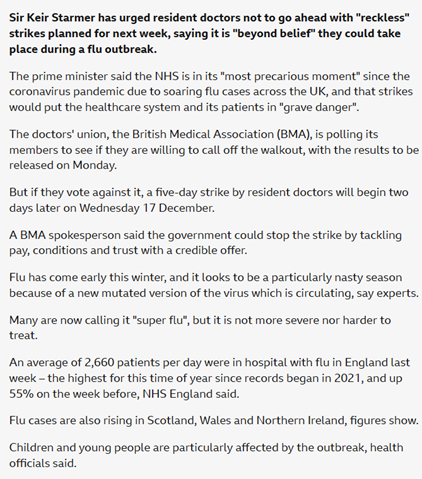
When shown an excerpt of a BBC news story headlined “Doctor strike during flu outbreak would be ‘reckless’, says Starmer” from December 2025 and asked where it applied, almost half of respondents (48%) incorrectly believed it referred to doctors across the UK, while only 41% correctly recognised that it applied solely to doctors in England, and a further 11% said they did not know. In other words, a majority of people (59%) did not know the story related to junior doctors striking in England only, or were wrong.
In another simulation to explore how people interpreted news reporting, respondents were shown two posts on X about housing (headlined “Government set to miss 1.5m target, housebuilders warn”) and fracking (headlined “‘We sent those frackers packing. I say let’s ban fracking and vow to send this bunch of frackers packing too’. Energy Secretary Ed Milliband takes aim at Reform’s environmental policies”). They were then asked to tick which political institution had responsibilities over these issues (either the Westminster government, the Welsh government, local councils or the European Union). Just 2% correctly identified both the Westminster government and the Welsh government as being responsible for both issues, with 92% not getting either question correct. Both these policies have been devolved to the Welsh government, which means UK government ministers make decisions about housing and fracking for England. Since both posts did not explicitly state which government was being referred to, it was perhaps understandable that so many respondents did not realise housing and fracking are the responsibility of the UK Government and the Welsh Government.
In the X post about housing, a majority of respondents attributed responsibility to Westminster (59%), with far fewer naming the Welsh Government (15%). Around a third (34%) said they didn’t know, while 13% thought local councils and 1% thought it was the responsibility of the European Union. Only 5% selected the correct combination of The Westminster Government and the Welsh Government.
In the X post about fracking, a majority of respondents once again attributed responsibility to Westminster (62%), with under one in ten identifying the Welsh Government (9%). A third (33%) said they didn’t know, while 6% attributed responsibility to local councils and 2% to the European Union. Only 3% selected the correct combination of the Westminster Government and the Welsh Government.
News consumption in Wales
UK‑wide news is the primary source of information for people in Wales, with nearly half (46%) stating they relied on UK outlets more often, compared with only 10% who said they mostly used Wales‑produced news, while a third (34%) drew on both equally and 10% said they don’t know.
For online news specifically, most people in Wales turned to UK‑wide outlets, with 53% saying they generally used sites such as BBC, ITV, Channel 4, Channel 5 or Sky News, compared with just 14% who mainly relied on Wales‑produced online sources (like BBC Wales or S4C), while 21% said they don’t typically use either type of site and 12% were unsure.
In UK-wide TV news bulletins, over a third (34%) said they watched BBC News at 6pm or 10pm very or fairly frequently (15% very, 18% fairly), compared with 30% who watched BBC Wales’ 6:30pm or 10:30pm bulletins with similar regularity (12% very, 18% fairly). On ITV UK-wide at 6.30pm or 10pm and ITV Wales at 6pm or 10.30pm, viewing habits were identical with 17% very or fairly frequently tuning in (5% very, 12% fairly).
Use of commercial online news outlets further highlighted the predominance of UK‑wide news consumption in Wales. A third of respondents (33%) said they read English‑based news sites or newspapers, such as The Times, Guardian, Daily Mail, Sun or Mirror very or fairly frequently (16% very, 17% fairly), while 30% did so not very often and 38% never used them.
By comparison, 29% of people used Wales‑produced online news outlets, such as WalesOnline, Nation.Cymru or North Wales Live, very or fairly frequently (8% very, 21% fairly), with similar proportions stating they read them not very often (33%) or never (38%).
Engagement with Welsh‑language online news is far lower still: only 3% used a Welsh‑language publication like Golwg 360 very or fairly frequently (1% very, 2% fairly), 12% doing so infrequently and 86% of people revealing they never used such sources.
Assessment of UK wide reporting
Public opinion was notably more negative than positive about UK‑wide media coverage of Welsh politics. Almost half of respondents (46%) said UK‑wide outlets did a bad job of reporting, including a near third (32%) of people who described reporting as fairly bad and a further 13% who said it was very bad. In contrast, only 28% thought the media performed well, with 26% saying that coverage was fairly good and just 2% believed it was very good. A further 26% said they were unsure.
Respondents were asked to explain their answer in their own words and these were categorised by YouGov's AI Topic Quantifier. The biggest reason (19%) among those who thought the media has done a bad job was that UK-wide news was too focused on areas like London, South East England, and England as a whole, leaving little room for reporting on Welsh politics. Many others reported that there was little coverage, with 18% saying there was not enough coverage, and a further 5% saying they never or rarely saw Welsh politics in the news. Many of the topics of responses found that the Welsh population believe they are seen as unimportant (2%), or irrelevant/uninteresting (9%). Among those who said the UK-wide news does a good job, the largest reason was that they thought Wales received appropriate coverage (13%).
Finally, when asked what one thing would improve news coverage of Welsh politics in these sources, the largest topic was giving it more airtime (14%) followed by creating a dedicated slot/channel to Welsh news (5%) and wide range of responses that were difficult to categorise thematically. However, notably 40% said they did not know when asked to state one thing they would improve in news coverage of Welsh politics.
Analysis: Understanding the political information environment in Wales
As Wales moves closer to the 2026 Senedd election, our new survey revealed how well the public understands the powers of devolved government, the key political figures seeking election and the system they will be voting under. Above all, we identified limited public knowledge in key policy issues, most strikingly in policing where nearly half of people thought it had been devolved to the Welsh government when it remains under the control of Westminster’s Parliament. We also discovered a significant minority of people did not realise health and education were devolved, or believed that immigration was a responsibility of the Welsh Government.
There was some evidence that public knowledge of devolved powers in Wales had improved over the last decade or broadly stayed the same. For example, though not directly comparable owing to different sampling methodologies and overall approaches a separate ICM poll from 2014 found 48% rightly knew the Welsh Government was in charge of the NHS and 61% correctly said education was devolved. In comparison to our 2026 survey, Cardiff University analysis suggests there could be an upward trend in the public’s understanding of which areas are devolved over the 12 years. The 2014 poll also found 42% wrongly thought the Welsh government was in control of policing, at a similar level to the 2026 YouGov poll.
The research further revealed relatively low recognition of Welsh party leaders. For example, according to the most recent You Gov poll, it is likely the Plaid Cymru leader - Rhun ap Iorwerth – will become the next First Minster of the Welsh Government. But just under half of people (47%) recognised him and knew who he was. Only Nigel Farage – who fronts the UK‑wide party – approaches universal recognition. Up until a few weeks ago Nigel Farage also acted as the de facto leader of Reform in Wales. But a few weeks before the poll went out, Dan Thomas was appointed the new leader of Reform in Wales. Yet the survey discovered just one in ten people knew properly who he was, despite the fact he may soon become the main opposition leader party at the Senedd or even the First Minister of the next Welsh Government.
Finally, the research found widespread public misunderstanding of the new Welsh electoral system, with just 7% correctly choosing the Closed List option. This is perhaps understandable given the technical language of different voting options (e.g. First Past the Post, Additional Member System and Single Transferrable Vote). But on the eve of an imminent Senedd election, it remains striking that a comfortable majority of people in Wales (58%) openly admitted they didn’t know what type of voting system would be used.
Concerns about how well the public understands devolved powers, Welsh political leaders and electoral arrangements have persisted since the early years of devolution. A major factor in these discussions has been the extent to which audiences in Wales depend on UK‑wide or England‑based media for their news. Despite over 25 years of devolution, our survey demonstrates the continued influence of UK-wide/English produced news over Wales-specific sources. It found UK‑wide news, such as BBC, ITV and Sky News, remains the primary source of information for many people in Wales.
While our past studies have shown these UK news outlets supply a range of high quality news provision, Welsh politics has historically played a relatively marginal role in day-to-day coverage. When politics is reported in UK network news, there is often limited clarity about which government across the four nations is in charge of domestic policies. For example, coverage of issues such as law and order, health service pressures and industrial action (including junior doctor strikes) have not always clarified whether these issues applied to England, to Wales, or to the whole UK.
The survey revealed people’s frustration with how UK-media outlets have reported Welsh politics, with almost half of respondents stating they have done a bad job compared to around a quarter who thought they had done a good job, while the rest were not sure. When asked to explain why, above all respondents believed UK-wide news was viewed through the prism on England and Westminster, with Welsh politics on the margins on coverage.
While the survey cannot assess the direct impact of media on public understanding – which would need to account for other factors such as age, education and social class – it does show the information environment Welsh audiences are routinely exposed to and suggest why they might misunderstand specific issues. For example, when we showed respondents a BBC news story about a junior doctors’ strike last December and asked where the issue applied, more believed it had UK‑wide relevance despite it being relevant to England only. Our systematic analysis of UK-wide news in 2025 showed outlets did not explicitly state what powers the devolved governments have across the UK, or regularly seek to compare and contrast policy decisions across the four nations. Against the backdrop of this information environment in Wales, it is understandable why there is widespread uncertainty about how which government across the UK is responsible for different powers, low awareness of Welsh party leaders and widespread confusion about the Senedd’s new voting system.
Ahead of May’s Senedd election, our findings demonstrate the important role UK-wide news outlets have in identifying whether a policy issue falls under Welsh or UK Government responsibility. The survey revealed that large numbers of voters remain unsure about who controlled key areas of public policy, and that many rely on UK‑wide news that does not regularly a story’s relevance to England, Scotland, Wales or Northern Ireland. During the devolved election campaigns, clarity in reporting will be essential, as voters in Wales will be relying heavily on UK‑produced broadcast, online and social media news to make sense of and understand the promises made by political parties. Ensuring that news stories accurately label devolved and reserved powers will help the public understand and make an informed decision about how Wales will be governed in future years.
The research was funded by the Welsh Government via Creative Wales. The AHRC’s Enhancing the Impartiality of Political News project supported the analysis.
All figures, unless otherwise stated, are from YouGov Plc. Total sample size was 1,544 adults. Fieldwork was undertaken between 12th - 25th February 2026. The survey was carried out online. The figures have been weighted and are representative of all Welsh adults (aged 16+).